Category: Gut Microbiome

Plain-English guides to the gut microbiome — what it is, why it matters, and what actually helps (without hype)

  • Microbiome Tests & Probiotic Supplements: What’s Worth It (UK)

    Microbiome Tests & Probiotic Supplements: What’s Worth It (UK)

    A calm, evidence-led guide for UK readers (no hype).

    Health information only. If you have persistent or worrying symptoms, speak to your GP or a registered dietitian.

    TL;DR

    Commercial microbiome tests are scientifically interesting but won’t tell you how to feel better. Probiotics may help specific conditions, particularly IBS symptoms and antibiotic-associated diarrhoea, but benefits are strain-specific, not universal. For most people, the unglamorous basics (diverse plants, adequate fibre, regular movement) will do more for gut health than any test or supplement.

    Key Takeaways

    • Guts UK does not recommend commercial microbiome testing for improving health or diagnosing conditions, the science isn’t there yet
    • Results can vary significantly depending on where in your stool sample the lab takes material, how it was stored, and which company analyses it.
    • No agreed definition of a ‘healthy microbiome’ exists—what’s optimal for one person may differ for another.
    • Probiotics are strain-specific: a product that helps IBS symptoms may do nothing for antibiotic-related diarrhoea (and vice versa).
    • Some professional guidance and patient resources suggest trying a probiotic for around 4 weeks (and up to 12 weeks for IBS symptoms) before deciding if it helps.
    • People who are immunocompromised, critically ill, or have central venous catheters should speak to their GP before taking any probiotic.
    • Red flag symptoms (blood in stool, unexplained weight loss, new symptoms over 50) always warrant a GP visit—no test or supplement should delay that.

    Do microbiome tests help most people?

    The short answer is no, not yet. While research into the gut microbiome is genuinely exciting, commercial testing has outpaced the science. Guts UK, the national digestive health charity, states clearly:

    We do not recommend commercial poo testing.

    Guts UK

    The British Society of Gastroenterology’s Gut Microbiota for Health Expert Panel echoes this, noting that current scientific knowledge isn’t at a stage to reliably support the tests, reports, and dietary advice these companies provide.

    This doesn’t mean microbiome research is worthless, far from it. Scientists around the world are making genuine discoveries about how gut bacteria influence digestion, immunity, and even mental health. The problem is translating population-level research into personal recommendations. Your microbiome is as individual as your fingerprint, and we don’t yet know what a ‘good’ result looks like for any particular person.

    The NHS does not offer comprehensive microbiome mapping. When GPs order stool tests, they’re looking for specific things: signs of infection, inflammation markers like calprotectin (which can indicate inflammatory bowel disease), or hidden blood.

    These targeted tests answer specific clinical questions. Commercial microbiome tests, by contrast, provide vast amounts of data without a clear framework for interpreting what it means for your health.

    Skip ahead: A sensible 4-week probiotic trial

    Why commercial gut tests can mislead

    The technical challenges are significant. Research published in a PLOS One study (2015) found that bacterial composition can vary substantially depending on where in a single stool sample the material is taken, and different microenvironments exist even within one bowel movement. The same study found that bacteria levels changed measurably if samples sat at room temperature for more than 15 minutes.

    Different companies use different methods, making results difficult to compare. A review in Clinical Gastroenterology and Hepatology highlighted several pitfalls: clinicians shouldn’t expect an individual’s microbiome to be stable, diet changes don’t necessarily produce effects large enough to matter compared to natural variation between people, and different laboratory and computational methods can yield substantially different results from the same sample.

    Then there’s the interpretation problem. These tests often compare your results to some reference population, but there’s no standardised definition of what constitutes a ‘healthy’ microbiome. A company might flag certain bacteria as ‘low’ without any evidence that boosting those particular microbes would improve your symptoms or health. Worse, different companies analysing the same sample can provide conflicting recommendations.

    The Advertising Standards Authority has taken action against several gut health companies for making unsubstantiated claims. This includes ruling against products claiming to ‘boost immunity’ through gut health effects without adequate evidence. If a company’s marketing promises sound too good to be true, they probably are.

    When to skip testing and what to do instead

    For most people with general digestive niggles or a desire to ‘optimise’ gut health, the evidence points firmly toward lifestyle fundamentals rather than testing. The British Dietetic Association, NICE, and the British Society of Gastroenterology all recommend starting with straightforward dietary and lifestyle approaches.

    Dietary diversity is the most consistently supported intervention. Eating a wide variety of plant foods, vegetables, fruits, whole grains, legumes, nuts, and seeds naturally provide different fibres that feed different beneficial bacteria. You don’t need to know which specific bacteria; you have to know that variety helps.

    Adequate fibre matters, but the type makes a difference. NICE guidance notes that soluble fibre (found in oats, barley, beans, and fruits) tends to help IBS symptoms, while insoluble fibre (like wheat bran) can sometimes make bloating and pain worse. If you’re increasing fibre, do it gradually, as a sudden jump can cause temporary discomfort while your gut adjusts.

    Read next: High fibre foods in the UK

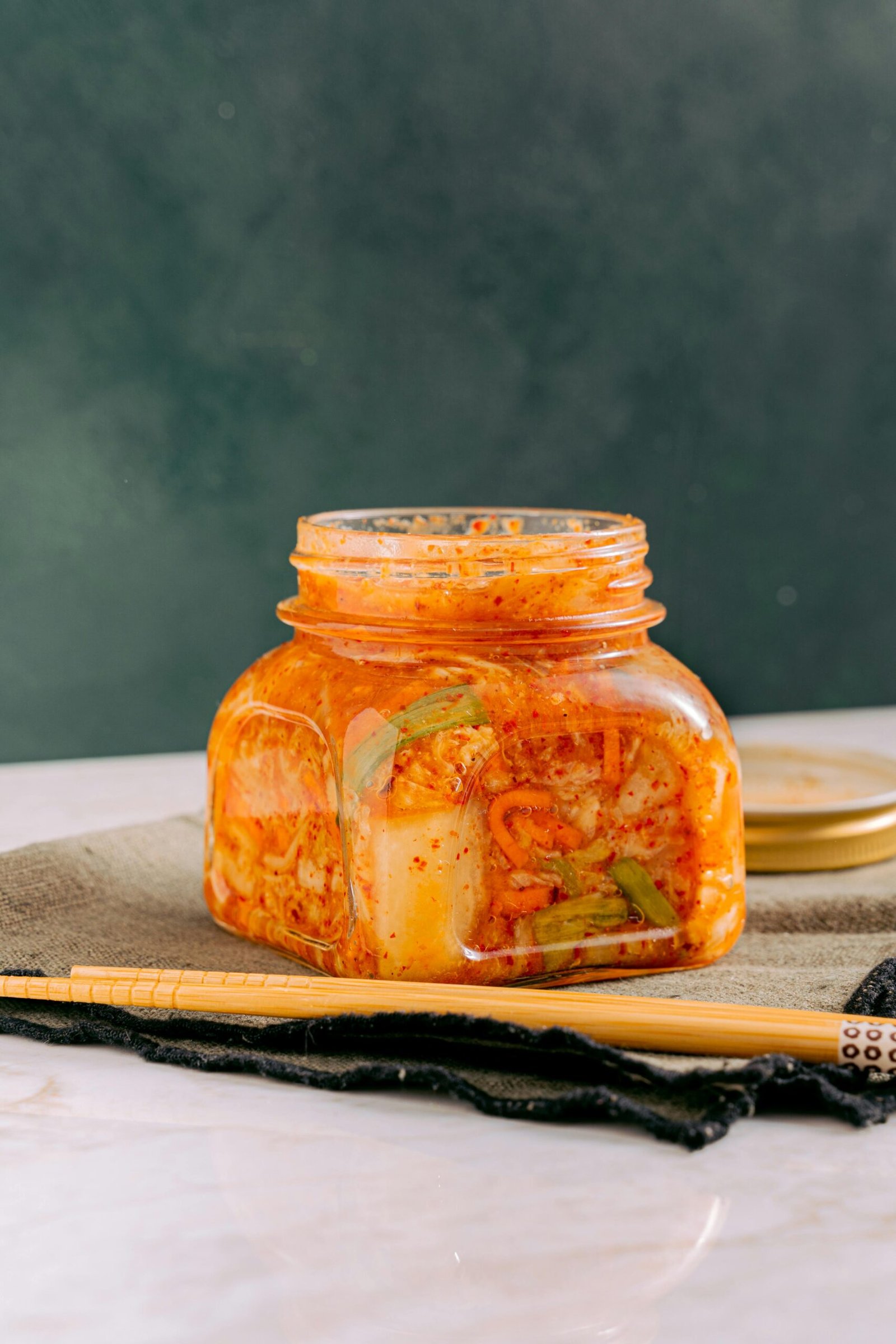
    Fermented foods offer another route to supporting gut bacteria without needing a test to tell you whether to try them. Foods like live yoghurt, kefir, sauerkraut, and kimchi contain living microbes. While the research on specific benefits is still developing, they’re generally safe for most people and have been part of human diets for millennia.

    Read next: Fermented foods for gut health

    Symptom tracking can be more useful than any commercial test. Keeping a simple food and symptom diary for two to four weeks often reveals patterns that point toward triggers or helpful changes. This personalised information, based on your actual body, is often more actionable than knowing you have ‘low Bifidobacterium’.

    So what should I do? If you’re generally well and curious about gut health, focus on the basics: aim for variety, prioritise plants, move regularly, manage stress where you can, and give any dietary changes time to work. Save your money on the test.

    A quick decision framework

    Skip the test and focus on basics if:

    • you’re hoping the report will diagnose a condition or pinpoint the cause of symptoms (it can’t do that reliably).
    • you want personalised diet/supplement advice from the report (it can’t reliably provide this yet).
    • you’re planning to spend a lot of chasing ‘perfect’ numbers.

    Consider speaking to a GP or dietitian first if:

    • you have red-flag symptoms (see below) or symptoms that are persistent/worsening.
    • you have complex health conditions or take immunosuppressive medicines.
    • you suspect coeliac disease, inflammatory bowel disease, or another condition that needs proper testing.

    If you still want to try something, a low-risk starting point is usually food first:

    • add 1–2 extra plant foods per day (aim for variety over perfection).
    • increase fibre gradually (soluble fibre is often better tolerated in IBS).
    • try fermented foods in small amounts if you enjoy them and tolerate them.

    Read next: Prebiotics vs probiotics vs postbiotics

    Probiotics: when they may help (and when they usually won’t)

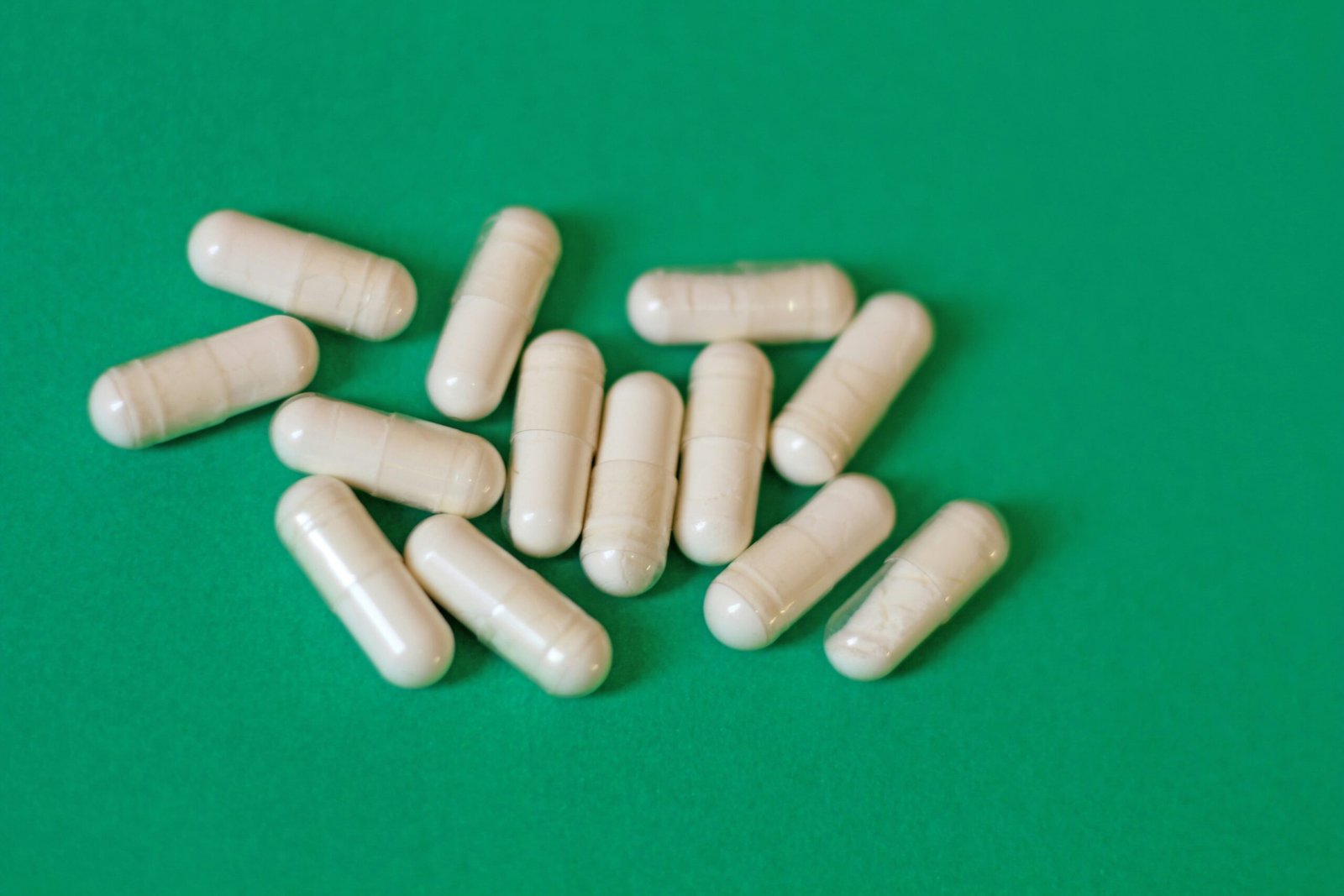
    Probiotics are live microorganisms that, when consumed in adequate amounts, may confer a health benefit. The key word is may. The evidence varies enormously depending on the specific strain, the dose, and the condition being treated.

    Where evidence is reasonably solid:

    Antibiotic-associated diarrhoea: A 2021 systematic review and meta-analysis in BMJ Open (2021) found that taking probiotics alongside antibiotics reduced the risk of antibiotic-associated diarrhoea by about 37% in adults. The Cochrane review on C. difficile-associated diarrhoea found probiotics may reduce risk, though the evidence quality was moderate. Certain strains (often Lactobacillus species and Saccharomyces boulardii) have the most supporting data. Importantly, timing matters; starting probiotics within 48 hours of beginning antibiotics appears more effective than starting later.

    Read next: Gut health after antibiotics or PPIs

    IBS symptoms: The British Society of Gastroenterology’s (2021) guidelines state that probiotics, as a group, may be effective for global IBS symptoms and abdominal pain. However, it is crucial that they don’t recommend any specific species or strain because no single probiotic has consistently outperformed others across studies. The recommendation is to try a probiotic for up to 12 weeks and stop if there’s no improvement.

    Where claims outpace evidence: Gut–brain and mental health claims (what the evidence really says)
    There is a gut–brain connection: gut microbes can interact with the nervous system and immune signalling. But when it comes to mood and anxiety, the clinical evidence for probiotics is mixed and strain-specific. Recent meta-analyses suggest small (and sometimes moderate) improvements in depressive symptoms in some adults with diagnosed depression, often alongside usual treatment, while benefits for anxiety are smaller and less consistent.

    Overall, this isn’t strong enough evidence to recommend probiotics as a treatment for depression or anxiety, and any benefit seems to depend on the exact strain, dose, and the person’s situation.

    Most studies are short (often 4–12 weeks), use different strains and doses, and results vary, so it isn’t accurate to market probiotics as a general “mood booster” or “anti-anxiety” fix. If you’re struggling with mood or anxiety, see probiotics (at most) as a cautious add-on, not a replacement for evidence-based support.

    A sensible 4-week probiotic trial (if you choose to try)

    Quick checklist (to avoid wasting money):

    • Pick ONE product and keep everything else stable for the first 4 weeks.
    • Track 2–3 symptoms you actually care about (e.g., bloating, pain, stool consistency).
    • Stop early if you feel worse and it doesn’t settle within 3–7 days.
    • If there’s no benefit after 4 weeks, stop. If you’re trying a probiotic for IBS symptoms, you can trial it for up to 12 weeks, then stop if there’s no improvement. Don’t ‘stack’ multiple products.

    If you decide to try a probiotic despite the limitations, here’s how to do it thoughtfully:

    Before you start: Note your current symptoms. Use a simple scale (1–10) for things like bloating, pain, or stool consistency. Write down what ‘normal’ looks like for you right now.

    Choosing a product: Look for products that name specific strains (not just ‘Lactobacillus’ but the full designation like ‘Lactobacillus rhamnosus GG’). Check for a CFU (colony-forming unit) count, though there’s no agreed-upon ‘correct’ dose, products used in research typically contain billions of CFUs. Consider whether the product has any research behind it for your specific concern.

    If you’re immunocompromised, have a central line, or are severely unwell, check with your GP/clinician before trying probiotics

    During the trial: Take the probiotic consistently, following the manufacturer’s instructions. Continue your normal diet. This isn’t the time to change multiple things at once. Keep tracking your symptoms weekly.

    What to track (keep it simple):

    • Any side effects (e.g., extra gas, nausea, looser stools)
    • Bloating (0–10)
    • Abdominal pain/discomfort (0–10)

    When to stop: If you want to try a probiotic, guidance commonly suggests a 4-week trial while monitoring symptoms; if there’s no benefit, stop and try something else. If you experience concerning side effects, significant bloating that doesn’t settle, new symptoms, or feeling generally unwell, stop sooner and speak to your GP.

    Be realistic: Even when probiotics help, the benefits are usually modest. Expect gentle improvement, not transformation.

    Who should be cautious / speak to a GP first

    While probiotics are generally safe for healthy individuals, certain groups should be more careful. The NHS specifically advises speaking to a doctor before taking probiotics if you have an existing health condition or a weakened immune system.

    People who are immunocompromised face the greatest risk. This includes those receiving chemotherapy or immunosuppressive drugs, people with HIV/AIDS, organ transplant recipients, and anyone with significantly weakened immune function. Case reports exist of probiotic organisms causing serious infections—including bloodstream infections—in these vulnerable groups. The theoretical ‘friendly’ bacteria can become opportunistic pathogens when the immune system can’t keep them in check.

    Critically ill or hospitalised patients should also exercise caution. The PROPATRIA trial, which examined probiotics in severe pancreatitis, was stopped early after higher mortality was observed in the probiotic group. While this was a specific scenario with very ill patients, it serves as a reminder that ‘natural’ doesn’t always mean ‘safe for everyone’.

    Other groups requiring caution:

    • People with central venous catheters (increased infection risk)
    • Premature infants (the FDA has warned about serious adverse events)
    • Those with short bowel syndrome
    • Anyone with structural heart disease or damaged heart valves

    If you fall into any of these categories, the decision to try probiotics should be made in consultation with your healthcare team, weighing potential benefits against real risks.

    When to see a GP urgently (red flags)

    No microbiome test or probiotic should ever delay seeking medical attention for concerning symptoms. NICE guidance is clear about ‘red flag’ symptoms that warrant prompt GP review:

    • Blood in your stool (whether bright red or dark/tarry)
    • Unexplained weight loss
    • Change in bowel habit lasting more than 3 weeks, particularly if you’re over 50
    • A new lump or mass in your abdomen
    • Severe abdominal pain, especially if sudden or getting worse
    • Signs of anaemia (unusual tiredness, breathlessness, looking pale)
    • Night-time symptoms that wake you from sleep
    • Family history of bowel cancer or inflammatory bowel disease

    Seek immediate medical attention (A&E or 999) for: severe abdominal pain with fever, signs of dehydration with ongoing vomiting or diarrhoea, vomiting blood, or signs of bowel obstruction (severe pain, inability to pass wind or stool, vomiting).

    These symptoms need proper medical investigation. No amount of gut health optimisation substitutes for appropriate clinical assessment.

    FAQ

    Can a microbiome test tell me why I have bloating/IBS/digestive problems?

    Currently, no. While research is exploring links between microbiome patterns and various conditions, we don’t yet have reliable ways to diagnose or guide treatment based on commercial test results. Your GP has better tools for investigating persistent digestive symptoms.

    Are probiotics from yoghurt as good as supplements?

    They’re different. Probiotic yoghurts and fermented foods typically contain fewer CFUs and may not survive stomach acid as well as some supplements. However, they come with additional nutritional benefits (protein, calcium) and have been part of human diets for millennia. For general gut health, there’s no strong evidence that expensive supplements outperform regular consumption of live-culture foods.

    How do I know if a probiotic is working?

    Track specific symptoms before you start and at regular intervals. Improvement should be noticeable to you—not dramatic necessarily, but you should be able to say ‘my bloating has improved’ or ‘my stool consistency is more regular’. If nothing changes after 4–12 weeks of consistent use, it’s likely not the right product for you.

    Should I take probiotics after every course of antibiotics?

    The evidence suggests probiotics may help prevent antibiotic-associated diarrhoea, particularly in people at higher risk (elderly, those taking broad-spectrum antibiotics, previous diarrhoea with antibiotics). For healthy adults taking a short course of targeted antibiotics, the benefit is less clear. If you’ve had problems before, it’s reasonable to try. Start within 48 hours of beginning antibiotics and continue for a few days after finishing.

    Are expensive probiotics better than cheap ones?

    Not necessarily. Price doesn’t guarantee quality, adequate CFU counts, or that the strains have evidence behind them. Look for specific strain names, storage instructions, and ideally some research supporting that product for your concern. The most expensive option isn’t automatically the most effective.

    Can I ‘heal’ my gut with the right probiotic?

    This language is common in wellness marketing but isn’t supported by evidence. Probiotics may help manage certain symptoms in certain people. They’re not a cure for gut problems and don’t ‘heal’ or ‘fix’ the microbiome in any permanent way. If you stop taking them, any benefits typically fade. Think of them as one potential tool among many, not a solution.

    My microbiome test says I have ‘dysbiosis’—what does that mean?

    ‘Dysbiosis’ roughly means an imbalance in gut bacteria, but it’s a vague term with no standardised definition. Different companies may use different criteria to define it. Crucially, we don’t know that the ‘imbalance’ they’ve identified is actually causing your symptoms or that correcting it would help. Many people with unusual microbiome profiles are perfectly healthy.

    References

    Official guidance:

    • NHS: Probiotics – nhs.uk/conditions/probiotics/
    • NICE Clinical Guideline CG61: Irritable bowel syndrome in adults: diagnosis and management – nice.org.uk/guidance/cg61
    • British Dietetic Association: Irritable bowel syndrome (IBS) and diet – bda.uk.com/resource/irritable-bowel-syndrome-diet
    • Guts UK: Gut Microbiome (Poo) Testing – gutscharity.org.uk/advice-and-information/health-and-lifestyle/testing/gut-microbiome-poo-testing/
    • ASA/CAP: Food: Probiotic claims guidance – asa.org.uk/advice-online/food-probiotic-claims

    Key research:

    • Vasant DH et al. British Society of Gastroenterology guidelines on the management of irritable bowel syndrome. Gut 2021;70:1214–1240
    • Goodman C et al. Probiotics for the prevention of antibiotic-associated diarrhoea: a systematic review and meta-analysis. BMJ Open 2021;11:e043054
    • Cochrane Review: Probiotics for preventing Clostridioides difficile-associated diarrhea (2025 update)
    • McKenzie YA et al. British Dietetic Association systematic review of probiotics in IBS. J Hum Nutr Diet 2016;29:576–592
    • Gorzelak MA et al. Methods for Improving Human Gut Microbiome Data by Reducing Variability. PLOS One 2015
    • Knight R et al. Microbiome 101: Studying, Analyzing, and Interpreting Gut Microbiome Data for Clinicians. Clin Gastroenterol Hepatol 2017

  • Gut Recovery After Antibiotics or PPIs: A Gentle UK Guide

    Gut Recovery After Antibiotics or PPIs: A Gentle UK Guide


    Finished a course of antibiotics and now your digestion feels “off”? Or maybe you’ve been on omeprazole (or another PPI) for a while and something just doesn’t feel quite right: more bloating, looser stools, constipation, or just a general sense that your gut isn’t behaving as it used to. Well, you’re not imagining it! Both antibiotics and acid-suppressing medications can shift what’s happening inside your digestive system. The reassuring news is that for most people, things settle over time, and there are gentle, practical ways to support that process without expensive supplements or dramatic diet overhauls.

    If you’re looking for practical support with gut health after antibiotics, this guide will help you rebuild gently and steadily. This guide is written with sensitive digestion in mind, including those of us managing fibromyalgia, ME/CFS, or chronic stress patterns where “just eat more fibre” can be the fastest route to feeling worse.

    Quick takeaways

    Why antibiotics and PPIs can upset your gut

    Antibiotics do exactly what they’re designed to do: kill bacteria. The difficulty is that they don’t always distinguish between the bacteria causing an infection and the bacteria that normally help your gut work smoothly. So for a while, your microbiome can become less diverse, and that can leave room for gas-producing or “opportunistic” microbes to flare up. That’s why some people notice bloating, looser stools, constipation, cramping, or food sensitivity during (or after) a course. PPIs (proton pump inhibitors) such as omeprazole and lansoprazole work differently. They reduce stomach acid, which is helpful for reflux and ulcers, but stomach acid also acts as a “gatekeeper” that influences which microbes make it further down the digestive tract. Lower acid levels may shift the microbial balance over time, and in some people, this links with changes in digestion, nutrient absorption, or infection risk. That doesn’t mean PPIs are “bad”; many people genuinely need them. It just helps to understand why your gut might feel different while using them, especially long-term. If you’d like the basics of how the microbiome works, start here: What is the gut microbiome?

    How long does gut recovery take?

    This varies far more than most articles admit. Some people feel back to normal within a few days of finishing antibiotics. Others notice changes for weeks and occasionally longer, especially after repeated courses, strong antibiotics, or if their gut was already sensitive.

    Recovery time can be influenced by the type and duration of antibiotic used, your baseline gut health, stress levels and sleep quality, how stable your eating pattern is, and whether you’ve been unwell or undernourished during treatment. With PPIs, gut shifts can be slower and more gradual. If you’ve been on one for months or years, it may take time for things to settle even after changes are made. The key point: most guts do recover, but it’s often a slower, gentler process than “do this for 3 days and fix it.”

    Gut health after antibiotics: what actually helps (evidence-informed and low-risk)

    These steps are designed for gut health after antibiotics, but they can also help if you’ve been using PPIs and your digestion feels unsettled.

    1) Go gentle with food first

    One of the most common mistakes after gut disruption is trying to “fix” things quickly, suddenly increasing fibre, adding lots of raw vegetables, or piling in fermented foods. For sensitive guts, that often backfires with more bloating, wind, discomfort, or urgent stools. Why it matters: your microbiome needs time to recalibrate. Throwing a huge amount of fermentable food at a system that’s unsettled can feel like adding fuel to a fire. A gentler starting point: begin with foods you already tolerate and keep portions moderate. Think steady nourishment, not a gut overhaul. Once you feel more stable for a few days, you can widen the variety slowly. If you’d like a step-by-step approach, we’ve written this specifically for sensitive guts: How to increase fibre without bloating

    2) Add prebiotic foods gradually (the “start tiny” approach)

    Prebiotic foods provide fuel for beneficial gut bacteria, but you don’t need powders, complicated protocols, or extreme diets to get started. A gentle place to begin is with one small change, such as a small bowl of oats (porridge or overnight oats), a slightly underripe banana (often gentler than very ripe ones for some people), or cooled potatoes or rice (a simple source of resistant starch). If that settles well, you can expand gradually. Other gentle options include cooked leeks/onions, barley in soups, or a small amount of lentils stirred into a meal, but the key is slow and steady, especially if you’re prone to IBS-type sensitivity or post-viral gut fragility. If you want the full explanation of what counts as prebiotic vs probiotic, this guide helps: Prebiotics vs probiotics vs postbiotics

    3) Fermented foods: helpful for some, not essential

    Fermented foods are often marketed as “gut healing must-haves”. In reality, they’re more personal than that. Some people feel noticeably better with them, some notice no change, and others feel worse at first (especially if bloating is already an issue). If you want to try them, the most gentle approach is to start very small, for example, a few spoonfuls of live yoghurt, a teaspoon of sauerkraut from the fridge section, or miso stirred into warm soup (not boiling water). If kimchi feels too strong, or kombucha feels too fizzy or acidic, skip for now. Fermented foods aren’t required for recovery; they’re just one tool, and only if your gut tolerates them. You can also read our full SFTG guide here: Fermented foods for gut health

    4) Probiotics after antibiotics — what the evidence actually says

    Some evidence suggests certain probiotic strains may reduce the risk of antibiotic associated diarrhoea (AAD) when taken during and shortly after antibiotics. But probiotics aren’t a guaranteed fix, and different people respond very differently. There’s also research suggesting that high dose probiotics may delay natural microbiome recovery in some cases, which is why we avoid blanket advice. If you choose to try a probiotic, the SFTG approach is to choose a product that names specific strains (not just “probiotic blend”), trial it for 2–4 weeks, then reassess, stop if it makes symptoms worse, and don’t chase “more CFUs” higher isn’t always better.

    Important: probiotics are usually safe for most people, but if you’re immunocompromised or seriously unwell, speak to your GP or specialist before using them. We’ll cover this in detail in our upcoming guide: Microbiome tests and probiotic supplements

    5) A “food + rhythm” reset (where recovery often accelerates)

    Your gut doesn’t only respond to what you eat. It responds to timing, sleep, stress load, and nervous system state. When stress is high, sleep is disrupted, and eating is irregular, digestion can become more sensitive, even if your diet looks “perfect” on paper. A few gentle resets can make a surprising difference: eating meals at roughly similar times each day, getting morning daylight (even briefly), a calmer evening wind down (dim lights, less screen glare), and gentle movement within your limits (especially important if you have ME/CFS or fibromyalgia). Think of it as creating conditions your gut can trust again: steady, predictable, and not demanding.

    6) Supporting the gut lining (without magic claims)

    You’ll see a lot of products promising to “heal your gut lining” or “seal leaky gut”. Some of that marketing is exaggerated. But supporting gut barrier function through basic nutrition is sensible and low risk. Helpful foundations include adequate protein across the day (your gut lining renews constantly), omega-3 fats (e.g., oily fish, walnuts, flax), polyphenol-rich foods (berries, olive oil, green tea, dark chocolate), and hydration, especially if you’ve had diarrhoea. This isn’t about curing chronic illness by “fixing your gut”. It’s about giving your body what it needs while it does its own repair work.

    7) If constipation is the problem

    Not everyone gets diarrhoea after antibiotics; some people become constipated, especially if their appetite has been low, their routine changed, or motility was already sluggish. Gentle options that often help include two green kiwis daily, prunes (start small and adjust), a warm drink in the morning, light walking if you can manage it, and a small amount of soluble fibre introduced slowly. If constipation persists, is painful, or is new and unexplained, it’s sensible to speak with your GP.

    8) If diarrhoea or urgency is the problem

    Loose stools and urgency are common during and after antibiotics, and for most people, they settle in days to a couple of weeks. In the meantime, focus on comfort and hydration: sip fluids regularly, consider an oral rehydration sachet if needed, use gentle binding foods temporarily (plain oats, rice, bananas), and avoid obvious triggers (alcohol, very fatty/spicy foods, artificial sweeteners). The goal here isn’t perfection, it’s keeping you stable and supported while your gut resets.

    A gentle 7-day rebuild plan (no strict rules)

    This isn’t a rigid protocol; instead, it’s a calming structure you can lean on. Days 1–2: settle + hydrate. Stick to foods you tolerate well. Rest counts as recovery. Days 3–4: add one gentle fibre source (oats/banana/small flax). Keep portions modest. Days 5–7: introduce one new prebiotic option (cooled potato, cooked leeks, small lentil portion). Optional: tiny fermented “taster” if you want to try it. Beyond: widen variety gradually. Small steps repeated calmly beat big swings every time.

    What to avoid (or be cautious with)

    Be cautious with “detox” supplements (often unnecessary and sometimes harsh), megadosing probiotics (more isn’t always better), forcing raw vegetables or huge salads too quickly, aggressive fasting while symptomatic (most people do better with gentle nourishment), and consumer microbiome tests marketed as “actionable” (often interesting, but rarely useful for recovery).

    When to speak to your GP

    Speak with your GP (or seek urgent care) if you have severe abdominal pain that doesn’t settle, high fever, blood in your stool, signs of dehydration (dizziness, confusion, very dark urine), symptoms lasting more than 2–3 weeks without improvement, symptoms getting worse rather than better, or persistent watery diarrhoea after antibiotics with cramping/fever (possible C. difficile).

    Bringing it together

    Gut recovery after antibiotics or PPIs doesn’t require perfection. It doesn’t require expensive supplements or dramatic changes. What it usually needs is time, gentle consistency, and a steady routine your gut can adapt to, especially if you’re already managing fatigue, pain, or sensitive digestion. Start where you are and keep it simple. Build slowly because your gut is resilient, and given the right conditions, it can recalibrate.

    Frequently asked questions

    How long does it take for gut bacteria to recover after antibiotics? For many people, recovery begins within days to weeks, but full recovery can take longer, especially after repeated courses or if your gut was sensitive beforehand. Focus on stability first, then gradually widen variety.
    Should I take probiotics after antibiotics? Some strains may reduce antibiotic associated diarrhoea risk, but probiotics aren’t essential for everyone. If you try one, choose a product that lists specific strains and assess after 2–4 weeks. Stop if your symptoms worsen though.
    What should I eat to restore my gut after antibiotics? Start with tolerated foods, then slowly add gentle prebiotic fibres like oats, cooked vegetables, and cooled potatoes. Fermented foods can be optional and introduced very slowly if tolerated.
    Can PPIs like omeprazole affect gut bacteria? Yes. PPIs reduce stomach acid, which can influence which microbes thrive in the gut. Many people do well on PPIs, but if symptoms develop over time, it’s worth discussing with a clinician.
    Why am I bloated after antibiotics? Antibiotics can temporarily reduce microbial diversity and shift fermentation patterns in the gut. This often improves over time, especially with steady eating, stress reduction, and gradual fibre increases.
    When should I worry about diarrhoea after antibiotics? Seek advice if it’s severe, persistent beyond two weeks, involves blood, fever, significant pain, or signs of dehydration. Persistent watery diarrhoea after antibiotics can sometimes indicate C. difficile infection.

    References (plain-English sources + key studies)


  • Fermented Foods for Gut Health: A Gentle Guide

    Fermented Foods for Gut Health: A Gentle Guide

    Fermented foods can support gut health for some people, but they’re not essential, and they’re not a cure. Start with tiny amounts (1–2 teaspoons or a few sips) of something you tolerate (live yoghurt/kefir, miso, small amounts of sauerkraut). If bloating/IBS symptoms flare, pause and focus on basics like regular meals and fibre you can tolerate.

    This is a gentle guide to fermented foods for gut health — what may help, what to try first, and how to start without flaring symptoms.

    Key takeaways

    • Fermented foods may support gut health for some people, but responses vary.
    • Start low and go slow: 1–2 teaspoons (or a few sips) is a sensible starting point.
    • “Best” options are the ones you tolerate: live yoghurt/kefir (if dairy is OK), small amounts of sauerkraut/kimchi, miso, tempeh, or live-culture pickles.
    • If you have IBS-type symptoms, watch for histamine, FODMAP triggers, and carbonation (kombucha can be a common culprit)
    • If you’re dairy intolerant, you may still tolerate live yoghurt better than milk (lower lactose), or use non-dairy live yoghurt—but check it contains live cultures
    • No need to ferment at home to benefit—shop-bought can work if it’s unpasteurised/live

    Fermented foods for gut health have been part of human diets for thousands of years, long before anyone used the word microbiome. Sauerkraut in Germany, kimchi in Korea, kefir in the Caucasus, miso in Japan. These weren’t wellness trends. They were practical ways to preserve food and, as it happens, to eat something that often agreed with the gut.

    Fermented foods for gut health: what they can and can’t do

    Today, fermented foods are having a moment. Supermarket shelves are stacked with kombucha, “gut shots”, and fermented everything. Some claims are sensible. Others are wildly overstated. If you have sensitive digestion, bloating, or IBS-type symptoms, it can be hard to know what’s worth trying and what’s just marketing noise.

    This guide is here to help you understand what fermented foods for gut health can realistically do, how to choose an option that might suit your body, and how to start gently without making symptoms worse.


    For a UK-based overview, the British Dietetic Association has a clear guide to fermented foods and how to include them safely.

    Let’s start with the evidence, because there’s a lot of overpromising in this space.

    Some fermented foods contain live microorganisms, and research suggests that regular intake may support gut microbiome diversity in some people. One of the most widely cited studies is the Stanford fermented food trial, which compared a high-fermented-food diet with a high-fibre diet over ten weeks. The fermented food group showed an increase in microbial diversity and changes in some inflammatory markers. (Wastyk et al., 2021)

    That’s genuinely interesting. But it doesn’t mean fermented foods are a cure for anything. People respond very differently. What works beautifully for one person might trigger bloating or discomfort in another.

    Fermented foods won’t “reset” or “detox” your gut. Your gut doesn’t work like that.

    It can help to think of fermented foods as one supportive tool, not a magic fix. If you already eat a varied diet and your digestion feels steady, you might notice very little change. If your gut is sensitive, the effects could go either way, which is why going slowly matters.


    What “counts” as fermented (and why labels matter)

    Fermentation is a process where bacteria or yeasts break down sugars in food, producing acids, gases, or alcohol. This changes flavour and texture and can create useful compounds during the process.

    The confusing bit is that not all fermented foods still contain live cultures by the time you eat them. Many foods are fermented during production but then baked, pasteurised, or heat-treated. Sourdough bread is a good example: fermentation is involved in making it, but baking kills live microbes. Similarly, some sauerkraut in jars is pasteurised to make it shelf-stable. It can still taste great, but it won’t contain the same live cultures as a chilled, unpasteurised version.

    If you specifically want live cultures, labels matter more than marketing words like “gut-friendly”. Look for phrases such as “live cultures”, “live and active cultures”, or “unpasteurised”. Refrigerated products are often more likely to be “live”, but it’s the label that tells the truth. Stanford Medicine has a useful explainer on recognising fermented foods and what still counts as “live”. (Stanford Medicine, 2021)


    Best fermented foods for gut health: what to try first (especially if you have IBS)

    If you’re new to fermented foods, start with the option that feels most realistic for your body and your kitchen. You don’t need to try everything; you’re looking for one small thing you tolerate well.

    For many people, bio-live yoghurt is the gentlest place to begin. It’s mild, widely available, and doesn’t come with the intensity of spicy or strongly flavoured ferments. Choosing a plain version and adding your own fruit can keep things simple and easy to tolerate. Kefir is another dairy option that some people love, and it often contains a wider range of microbes, but it can feel sharper and more tangy. If you try it, start with a small amount rather than a full glass.

    If dairy doesn’t suit you, you can still explore fermented foods through miso or tempeh. Miso is usually used in small quantities, stirred into warm water or added at the end of cooking, which makes it a gentle entry point. Tempeh is fermented soy in a firm block; once cooked, it can be easy to digest for some people and adds protein without being overly “gut trendy”.

    If you’re drawn to vegetable ferments, it’s often kinder to start with plain sauerkraut rather than kimchi. Kimchi can be brilliant, but it’s typically spicier and more likely to contain garlic and onion, which can trigger IBS symptoms for some people. With either option, a teaspoon alongside a meal is enough to begin with; you’re testing your tolerance, not chasing a target.


    How much fermented food per day is sensible?

    There’s no official UK guideline for how much fermented food you “should” eat.

    Some research trials use amounts that don’t reflect everyday life. In the Stanford study, fermented foods were gradually increased over time, and the end amounts were more than many people naturally eat day to day. (Wastyk et al., 2021)

    A more practical approach is to start with a small amount regularly and see what your body does with it. That might be a few spoonfuls of yoghurt, a small cup of miso broth, or a teaspoon of sauerkraut with dinner. If that feels fine after several days, you can increase slowly. If it doesn’t feel fine, you can step back without feeling like you’ve “failed”.

    Some people prefer fermented foods with meals rather than on an empty stomach, because the rest of the meal can buffer the effect. Others like them as a snack. There’s no perfect rule, only what your gut tolerates.


    If fermented foods make you bloated (or you have IBS)

    Fermented foods can be a little bit “too lively” for some guts, especially at the beginning. There are several reasons you might feel more bloated after trying them.

    Sometimes it’s simply the fizz. Kombucha and some kefirs are naturally carbonated, and if you’re already prone to bloating, adding gas can make you feel uncomfortable. In other cases, it’s the ingredients. Kimchi, for example, is often made with garlic, onion, and other fermentable carbohydrates that can be difficult for IBS guts. Monash University’s FODMAP resources note that tolerance varies by product and portion size, which is why one person can thrive on a food that another person struggles with. (Monash University, 2023)

    Histamine is another possible piece of the puzzle. Fermented foods can be higher in histamine, and some people are more sensitive than others. If you notice headaches, flushing, itchy skin, or feeling unusually “wired” after fermented foods, histamine intolerance is worth discussing with a clinician or dietitian rather than pushing through. (Comas-Basté et al., 2020)

    If fermented foods have caused symptoms before, the gentlest approach is to restart with amounts so small they feel almost ridiculous — a teaspoon of yoghurt, a tiny forkful of kraut, or even just a bit of the brine mixed into a meal. Introduce only one fermented food at a time, give it a few days, and only increase when things feel settled.

    If you want to build your baseline first, you might also like our guide on how to increase fibre without bloating.


    When to be cautious

    Fermented foods are safe for most people, but there are situations where extra care is sensible.

    If you’re immunocompromised or taking immunosuppressant medication, it’s worth speaking to your doctor before regularly eating unpasteurised fermented foods. Live bacteria are generally beneficial for healthy people, but the risk-benefit balance changes if your immune system is severely weakened.

    It’s also worth keeping an eye on salt. Sauerkraut, kimchi, and miso can be high in sodium, especially in larger servings. If you’re managing blood pressure or you’ve been advised to reduce salt, small portions are usually the best fit.

    And if fermented foods consistently make you feel worse rather than better — even in tiny amounts — that’s information worth respecting. They’re not essential, and you can support your gut health in other ways, including through overall dietary variety and fibre tolerance over time.

    If you’d like the broader picture, our article on prebiotics, probiotics, and postbiotics explains how these different concepts fit together without hype.


    A quick way to tell if this is working for you

    If fermented foods suit you, the signs are usually subtle rather than dramatic. You might notice steadier digestion, a bit less discomfort after meals, or simply that your gut feels calmer over time. If they don’t suit you, you’ll usually know fairly quickly: worsening bloating, more pain, looser stools, or feeling “off” in a way that seems linked to the food.

    The goal isn’t to force yourself into fermented foods. The goal is to test gently and see if they help you.


    Frequently asked questions

    Do all fermented foods contain live cultures?

    No. Some are baked or pasteurised after fermentation, which kills live microbes. If you want live cultures, look for “contains live cultures”, “live and active cultures”, or “unpasteurised”. (Stanford Medicine, 2021)

    How much fermented food should I eat per day?

    There isn’t a fixed amount. A small portion most days is a sensible starting point, and you can adjust based on how your body responds. (Wastyk et al., 2021)

    Can fermented foods cause bloating?

    Yes, especially when you first introduce them. Carbonation, portion size, ingredients like garlic/onion, and individual sensitivity can all play a role. (Monash University, 2023)

    Are fermented foods safe for IBS?

    Sometimes, but tolerance varies. Many people do best with gentler options and smaller portions. If you’re following a low-FODMAP approach, it can help to work with a dietitian. (Monash University, 2023)

    What’s the gentlest fermented food to start with?

    Bio-live yoghurt is often the easiest entry point. If dairy doesn’t suit you, a small amount of miso in warm broth can be a gentle alternative. (British Dietetic Association, 2023)

    If you’re exploring fermented foods for gut health, the best approach is consistency in small portions rather than big doses.


    References

    British Dietetic Association (2023). Fermented foods.
    Comas-Basté, O., Sánchez-Pérez, S. and Veciana-Nogués, M.T. (2020). Histamine intolerance: The current state of the art. Nutrients, 12(9), 2734.
    Monash University (2023). Fermented foods and FODMAPs (Monash FODMAP resources).
    Stanford Medicine (2021). Fermenting the Facts / How to recognise fermented foods.
    Wastyk, H.C., Fragiadakis, G.K., Perelman, D., et al. (2021). Gut-microbiota-targeted diets modulate human immune status. Cell, 184(16), 4137–4153.


    If you’d like to keep building your foundations, you may also find these helpful:
    What is the gut microbiome?
    Microbiome tests & probiotic supplements: what’s worth it?

  • High Fibre Foods UK: 15 Easy Picks (Without Bloating)

    High Fibre Foods UK: 15 Easy Picks (Without Bloating)

    High fibre foods in the UK can be a game-changer for digestion, but only if you add them in a way your gut can tolerate. If you’re searching for high fibre foods UK options that won’t leave you bloated, you’re in the right place. You know the advice: eat more fibre. It’s good for digestion, good for your gut, good for everything.

    So you do what most people do… you buy bran cereal, add lentils, swap to wholegrain everything…

    …and suddenly your stomach feels like a balloon.

    If that’s you, you’re not failing at healthy eating. You’re just doing what many of us do: adding too much, too fast, without giving your gut time to adjust.

    If you’re also exploring fermented foods, here’s our gentle guide to fermented foods for gut health.

    This guide will give you a UK-friendly list of high fibre foods, the difference between soluble fibre, insoluble fibre and resistant starch, and a gentle, realistic way to increase fibre without bloating.

    Because the goal isn’t “maximum fibre overnight”. It’s steady fibre your body can actually tolerate.

    What is fibre (and why does it matter)?

    Fibre is the part of plant foods that your body can’t fully digest. Instead of being absorbed like fats, proteins or carbohydrates, fibre travels through your gut and helps with regular bowel movements, stool softness and bulk, and feeding the bacteria in your gut (your microbiome).

    In the UK, adults are advised to aim for around 30g of fibre per day, but most people fall well short of that.

    And here’s the important bit: if you suddenly go from “not much fibre” to “loads of fibre”, your gut bacteria get a surprise feast. As they ferment all that new fibre, they can produce extra gas, which often means bloating, discomfort and that frustrating “why did I bother?” feeling.

    So if fibre makes you bloat, it doesn’t always mean fibre is “bad for you”. It often just means you’ve increased it faster than your gut can adapt.

    The 3 types of fibre (and why your gut may react differently)

    Not all fibre behaves the same way. Knowing the difference helps you choose foods that feel gentler and still support digestion.

    Soluble fibre (often the gentlest starting point)

    Soluble fibre absorbs water and forms a soft gel in the gut. It tends to be slower-moving and often feels calmer for sensitive digestion.

    Common soluble fibre foods include:

    • porridge oats
    • barley
    • chia seeds
    • ground flaxseed
    • psyllium husk (small amounts)
    • apples and pears (especially stewed)
    • carrots and parsnips (cooked)

    If your digestion is unpredictable (constipation one week, loose stools the next), soluble fibre is often the safest place to begin.

    Insoluble fibre (helpful, but go steady)

    Insoluble fibre adds bulk and helps keep things moving. It can be very useful for constipation, but some people find it more irritating if they’re prone to bloating or cramping.

    Common sources include:

    • wholemeal bread
    • wheat bran (including some bran cereals)
    • brown rice
    • wholegrain pasta
    • vegetable skins and seeds

    If this kind of fibre sets you off, don’t panic, you don’t have to avoid it forever. It often just needs a slower build-up. One easy adjustment is switching from lots of raw veg and bran to gentler options like soups, stews and roasted vegetables.

    Resistant starch (a quiet gut-helper)

    Resistant starch is a type of carbohydrate that “resists” digestion in the small intestine and reaches the large bowel, where gut bacteria ferment it.

    Fermentation can produce short-chain fatty acids (SCFAs) compounds linked with gut health processes, including supporting how the gut lining functions. This isn’t a cure-all, but it’s one reason some fibres are considered especially gut-friendly.

    Resistant starch sources include:

    • lentils, chickpeas and beans
    • oats
    • cooked then cooled potatoes
    • cooked then cooled rice
    • slightly green bananas

    Resistant starch can be brilliant, but it can also cause gas if you overdo it. Small portions first is the key.

    For more on how gut bacteria use fibre, see: Prebiotics vs Probiotics vs Postbiotics

    High fibre foods UK: simple, realistic options

    Let’s keep this practical. Below is a simple high fibre foods UK list you can actually use day-to-day. The kind of fibre foods you can actually buy in UK supermarkets and use in normal meals.

    High fibre breakfast ideas

    • Porridge oats (an easy soluble fibre win)
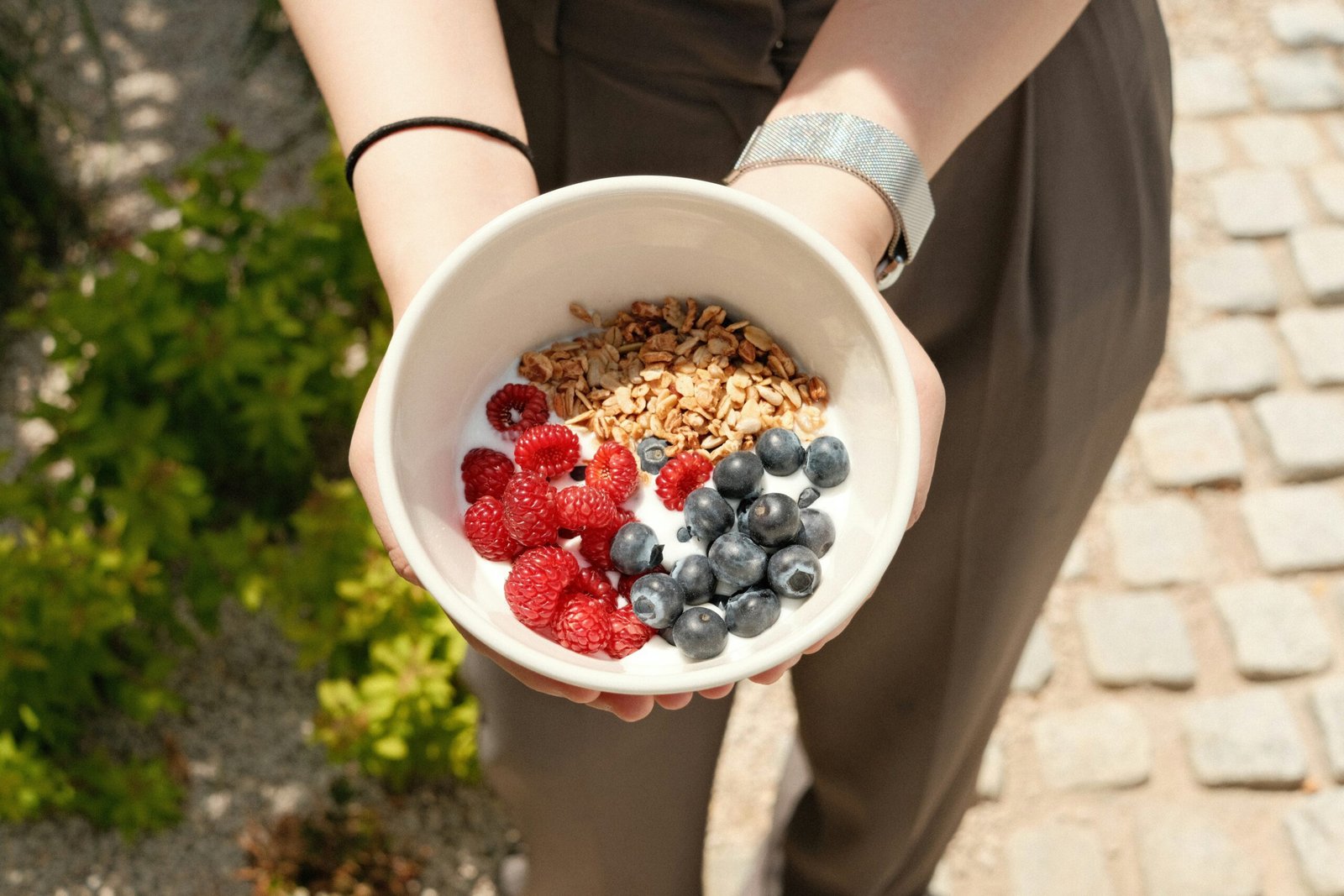
    • Chia or ground flaxseed stirred into yoghurt
    • Raspberries or blackberries (high fibre for their size)
    • Wholemeal toast (if tolerated)
    • Weetabix-style cereals (go steady and add fluids)

    If bran cereal makes you bloat, don’t force it. Oats are often a calmer daily staple.

    High fibre lunch and dinner choices

    • Lentils, chickpeas and beans (start with 2–3 tablespoons)
    • Sweet potato (skin on if tolerated)
    • Cooked vegetables like carrots, peas, spinach and broccoli
    • Wholegrains like quinoa, bulgur wheat or brown rice
    • A gentle upgrade swap: half white + half wholegrain pasta or rice

    A lot of people find “half-and-half” is the sweet spot: you get the benefit without the blow-up.

    High fibre snacks that won’t feel like punishment

    • Pears, apples, oranges
    • A small handful of almonds or walnuts
    • Hummus with oatcakes
    • Plain popcorn
    • Berries with yoghurt

    Snacks are a great way to build fibre slowly without making meals feel heavy.

    Quick reference table

    Food groupUK examplesGentle starting portion
    Grainsporridge oats, wholemeal bread1 small bowl / 1 slice
    Legumeslentils, chickpeas, baked beans2–3 tablespoons
    Vegetablescarrots, peas, broccoli, sweet potato½ cup cooked
    Fruitberries, pears, apples1 portion
    Nuts/seedsalmonds, chia, flaxseed1 tablespoon

    How to increase fibre without bloating (the gentle method)

    This is the part most people miss.

    They hear “eat more fibre” and change everything overnight, then spend the next few days uncomfortable.

    A calmer approach works better.

    Fibre comfort rules (simple, but powerful)

    • Start low, go slow — increase fibre over 1–2 weeks, not overnight.
    • Spread fibre across the day — a little at breakfast + a little at lunch + a little at dinner is easier than one mega-fibre meal.
    • Increase fluids alongside fibre — fibre pulls water into the gut; without enough fluid, constipation and bloating can worsen.
    • Start with softer fibres first — oats, chia, cooked veg, stewed fruit.
    • Cook vegetables if you’re sensitive — raw veg can be harder work for digestion. Soups, stews and roasted veg are often better tolerated.
    • If constipation is part of the picture — fibre alone isn’t always enough. Many people do best with warm drinks in the morning, a consistent routine, and gentle movement.

    7-day gentle fibre ramp (no drama)

    Days 1–2:

    Add one new fibre habit (porridge oats OR berries)

    Days 3–4:

    Add a small resistant starch portion (2–3 tablespoons lentils or chickpeas)

    Days 5–7:

    Add one extra portion of cooked veg AND one half-and-half wholegrain swap

    If your gut complains at any stage, hold steady for a few more days. That is still progress.

    Read more: NHS guide to getting more fibre into your diet

    Sensitive gut or IBS? Here’s the gentle version

    If you have IBS (or a gut that flares easily), fibre can still help — but it needs more care.

    Many people do best starting with soluble fibres (like oats or psyllium) and going slower with highly fermentable fibres (like large bean portions).

    If symptoms are unpredictable, the safest approach is:

    • one change at a time
    • cooked foods over raw
    • smaller portions more often

    If you’re unsure, a registered dietitian can help tailor fibre increases safely.

    Quick UK cheat list: What foods are high in fibre?

    If you take one thing from this guide, let it be this: go gently, and choose high fibre foods UK options your gut tolerates.

    Here’s a quick fibre rich foods list you can screenshot:

    • porridge oats
    • baked beans
    • lentils and chickpeas
    • raspberries and blackberries
    • pears and apples
    • broccoli and carrots
    • sweet potato
    • wholemeal bread
    • chia seeds and ground flaxseed
    • almonds
    • popcorn
    • bran cereals (only if tolerated)

    What are the best high fibre foods for constipation?

    Foods that combine fibre with good hydration often work well. Prunes, pears, and kiwi fruit have evidence supporting their use for constipation. Oats and ground flaxseed can also help. Increase fluids alongside any fibre increase, and give changes a week or two to take effect.

    What if fibre makes me gassy?

    Some gas is normal when you increase fibre — it’s a sign your gut bacteria are adapting. If it’s excessive, you may be increasing too quickly. Slow down, focus on gentler soluble fibres (like oats or chia), and spread fibre across the day. For most people, this settles within a few weeks.

    What is the best fibre for a sensitive gut?

    Soluble fibre sources like oats, chia seeds, psyllium, and cooked carrots are often better tolerated. Start with small portions and build gradually. Cooking vegetables well and avoiding large bean portions in one sitting can also help reduce bloating.

    How long does bloating last when increasing fibre?

    For most people, bloating improves within two to four weeks as gut bacteria adjust. If bloating persists, worsening discomfort can be a sign you’re increasing too fast — slow down and hold steady for a few more days. If symptoms are severe or ongoing, speak to a healthcare professional.

    How much fibre should I eat per day in the UK?

    The UK recommendation is around 30g of fibre per day for adults. But if you’re currently eating much less, it’s better to work up gradually rather than trying to hit 30g immediately. Consistency matters more than speed.

    Is it OK to increase fibre if I have IBS?

    It can be, but it needs extra care. Some people with IBS do better with soluble fibre, while others may react to certain highly fermentable or high-FODMAP fibres. A slow, gentle approach is best, and if you’re unsure, a registered dietitian can help tailor the right plan.

    What are signs I should slow down?

    Excessive bloating, cramping, sudden changes in bowel habits, or persistent discomfort can mean you’ve increased fibre too quickly. Pause where you are, reduce slightly if needed, and move forward more gradually.

    Final takeaway

    You don’t need to hit 30g of fibre overnight.

    The best fibre plan is the one your body can tolerate consistently.

    Start with one small change this week — oats at breakfast, a few spoonfuls of lentils at dinner, or one extra portion of cooked veg — then build slowly.

    For more gut-friendly basics, explore:

    Medical disclaimer: This article is general information, not medical advice. If you have severe symptoms (blood in stool, unexplained weight loss, persistent or worsening pain), please seek medical advice.

    Sources

    • NHS – How to get more fibre into your diet
    • British Dietetic Association (BDA) – Fibre and healthy eating resources
    • Scientific Advisory Committee on Nutrition (SACN) – Carbohydrates and Health report
    • Mayo Clinic – Dietary fibre: essential for a healthy diet
    • Cleveland Clinic – High-fibre foods and soluble vs insoluble fibre
    • Harvard T.H. Chan School of Public Health – Fibre and the gut microbiome
    • Monash University – Fibre and IBS guidance

  • Prebiotics vs Probiotics vs Postbiotics: 7 Simple Truths

    Prebiotics vs Probiotics vs Postbiotics: 7 Simple Truths


    Prebiotics vs probiotics vs postbiotics can sound confusing at first, but the differences are simpler than most supplement labels make them seem.

    When Every Supplement Feels Like a Gamble

    In this guide to prebiotics vs probiotics vs postbiotics, we’ll keep it simple, flare-aware, and focused on what actually helps sensitive guts.

    If you live with fibromyalgia, ME/CFS, or chronic primary pain, you’ve probably noticed that your gut has opinions. Strong ones.

    You might have tried a probiotic that a friend swore by, only to spend three days bloated and exhausted. Or perhaps you read that fibre is “essential for gut health” and ended up with symptoms that set you back a week.

    Meanwhile, the wellness industry keeps adding new words: prebiotics, probiotics, postbiotics, and synbiotics. Each one promising transformation. Each one another thing to research when you’re already running on empty.

    Here’s the reassurance: you don’t need to master all of this. You don’t need expensive supplements. And you certainly don’t need to overhaul your diet overnight.

    What helps most people with sensitive systems is something far quieter: small, consistent, tolerable changes with clear stop rules if things flare.


    30-Second Definitions: The Simple Version

    Think of your gut microbiome as a garden. These three terms describe different ways of tending it:

    Prebiotics = Fuel for your existing microbes. These are types of fibre and plant compounds that feed the bacteria already living in your gut. You don’t digest them, your microbes do.

    Probiotics = Visiting microbes Live bacteria (or yeasts). These you consume, usually through fermented foods or supplements. They pass through your system and may have temporary effects, but most don’t take up permanent residence.

    Postbiotics = Helpful by-products. When your gut microbes break down prebiotics, they produce compounds like short-chain fatty acids (SCFAs). These by-products may support the gut lining and are involved in immune and gut–brain signalling. Some supplements now sell these directly, but your body can make them from fibre.


    What We’re Actually Aiming For

    It’s tempting to think the goal is a “perfect” microbiome, some ideal balance you can test and optimise your way towards. But that’s not how it works.

    The research suggests what matters more is resilience and tolerance: a gut environment that can handle small challenges without overreacting, and that sends steadier signals to the rest of your body (including your nervous system and immune function).

    For people with fibromyalgia, ME/CFS, or chronic pain, this is especially relevant. Many of us have heightened sensitivity not just in muscles and joints, but in the gut too. The aim isn’t to force dramatic change. It’s to gently expand what your system can tolerate, without triggering flares. Consistency beats intensity. Always.

    If you’re prone to flares, think micro-doses and slow build-ups, not “fixes.”


    Decision Tree: What Should I Try First?

    If you’re flare-prone, the safest approach to prebiotics vs probiotics vs postbiotics is to start with micro-doses and build slowly. Here’s a sensible order of priority:

    Step 1: Food-Based Prebiotics in Tiny Doses (Default Starting Point)

    This is where most people should begin. It’s the lowest risk option, requires no supplements, and works with what your microbes already do.

    See the Prebiotics section below for how to start.

    Step 2: Fermented Foods. Only If Tolerated Though!

    If you already eat yoghurt, kefir, sauerkraut or kimchi without issues, continue. If you’ve never tried them, introduce one at a time in small amounts.

    If fermented foods cause bloating, headaches, or flares, skip this step entirely. It’s not essential.

    Step 3: Probiotic Supplements But Only With a Clear Reason

    Probiotics aren’t a general “health boost.” Evidence for their use is strain-specific and often temporary. Consider a short trial if:

    • You’re recovering from a bout of gastroenteritis
    • You’ve recently finished antibiotics (as an optional supportive measure)
    • You have a specific pattern your GP has suggested probiotics might help with

    Otherwise, there’s no rush. Many people do fine without them.

    Step 4: Postbiotic Supplements. Usually Not Needed Early!

    These are newer to the market and often expensive. For most people, supporting your microbes with gentle prebiotic fibre achieves the same outcome more affordably.

    If you’re curious, see the Postbiotics section, but this isn’t a priority.


    Prebiotics: Feeding What’s Already There

    Prebiotics are specific types of fibre and plant compounds that your gut bacteria ferment. When they do, they produce short-chain fatty acids (SCFAs), particularly one called butyrate, which helps support the gut lining and may influence immune and gut–brain signalling.

    This is one of the most evidence-supported ways to nurture your gut microbiome. But there’s a catch.

    Why Prebiotics Can Cause Bloating

    When gut bacteria ferment fibre, they produce gas. That’s normal. But if you increase fibre too quickly or your system is already sensitive, the result can be bloating, cramping, or altered bowel habits.

    This doesn’t mean prebiotics are wrong for you. It usually means the dose was too high, too fast.

    Micro-Dosing Plan: Gentle Starter Steps

    Week 1: Add one new prebiotic food in a tiny amount, think half a teaspoon of cooked, cooled oats, a few slices of banana, or a small portion of cooked carrots. Have it once daily, ideally at the same mealtime.

    Week 2: If tolerated, either slightly increase the portion or add a second food on alternate days.

    Ongoing: Build up over weeks, not days. There’s no deadline.

    Gentle Food Sources

    • Oats (cooked and cooled if possible as this increases resistant starch)
    • Bananas (slightly underripe have more prebiotic content, but ripe is fine)
    • Cooked and cooled potatoes or rice
    • Leeks, onions, garlic (in small amounts; cook well to soften)
    • Asparagus, Jerusalem artichokes (start very small as these are potent)

    Stop Rules

    • If bloating becomes uncomfortable or persists beyond 3–4 days, reduce the amount or pause entirely.
    • If you notice a clear flare pattern (fatigue, pain increase, brain fog), stop the new food and wait a week before reconsidering.
    • One change at a time makes it easier to identify what’s helping or hindering.

    Probiotics: Visitors, Not Residents

    Probiotics are live microorganisms, usually bacteria, sometimes yeast, that you consume through food or supplements. The idea is that they confer a health benefit while passing through your gut.

    But here’s what the research actually shows: effects are strain-specific and often temporary. A probiotic that helps one condition may do nothing for another. And most strains don’t colonise your gut permanently, they visit, do their work (or don’t), and leave.

    Who Might Consider a Trial?

    • After antibiotics: Some evidence suggests certain strains (like Saccharomyces boulardii or specific Lactobacillus strains) may help reduce antibiotic-associated diarrhoea. This is optional, not essential.
    • Specific diarrhoea patterns: If your GP has suggested trying a probiotic for IBS-D or a similar pattern, a time limited trial with a single strain makes sense.
    • Traveller’s diarrhoea prevention: Some people find certain strains helpful before travel.

    Who Should Be Cautious or Seek Advice First?

    • Anyone who is immunocompromised
    • People with central venous catheters
    • Those with serious gut conditions (e.g., short bowel syndrome, recent gut surgery)
    • Anyone unsure whether a probiotic is appropriate for their situation

    If in doubt, ask your GP or pharmacist before starting.

    How to Trial Safely

    1. Choose one product with a clearly labelled strain (not just “Lactobacillus” — look for the full name, e.g., Lactobacillus rhamnosus GG).
    2. Start with a lower dose if the product allows.
    3. Trial for 4 weeks maximum before assessing.
    4. Keep everything else constant, don’t start a new food or supplement at the same time.
    5. If symptoms worsen significantly in the first week, stop.

    Do Probiotics Help Fibromyalgia?

    The honest answer: we don’t know yet. Some early studies suggest gut microbiome differences in people with fibromyalgia, and a few small trials have explored probiotics, but the evidence is too limited to make recommendations. Anyone claiming a specific probiotic “treats” fibromyalgia is overstating the science.


    Postbiotics: Helpful By Products (With a Marketing Problem)

    “Postbiotics” is a newer term, and it’s become a bit of a marketing magnet. The basic idea is sound. When gut bacteria ferment fibre, they produce beneficial compounds, particularly short-chain fatty acids like butyrate, acetate, and propionate. These compounds may support the gut lining and are involved in immune and inflammatory signalling.

    The Confusion

    Some supplement companies now sell postbiotics directly, essentially bottling what your microbes would produce if you fed them well. This isn’t necessarily wrong, but it’s worth asking: do you need to buy what your body can make for free?

    For most people, consistently eating tolerable amounts of prebiotic fibre achieves the same outcome. The gut produces these compounds naturally when you give it the raw materials.

    When Might Postbiotic Supplements Make Sense?

    • If you genuinely cannot tolerate any prebiotic fibre (even in micro-doses) and want to experiment cautiously.
    • If a specific product has been recommended by a healthcare professional for a particular reason.

    Otherwise, this is low priority. Spend your energy (and budget) elsewhere first.


    Lowest Risk. Two Week Starter Plan

    This plan is designed for sensitive systems. It assumes fatigue, flares, and limited capacity. Adjust timing to suit your energy patterns.

    Days 1–4: Observation

    Don’t change anything yet. Simply notice your current baseline energy, digestion, pain levels, and sleep. Jot down a few words each day if you can.

    Days 5–7: Introduce One Micro-Dose

    Choose one gentle prebiotic food (e.g., 1–2 tablespoons of cooked, cooled oats or a few slices of banana). Have it at the same meal each day.

    Days 8–10: Assess

    How do you feel? Any increase in bloating, discomfort, or fatigue?

    • If fine: Continue at the same dose.
    • If mild bloating: Reduce portion slightly; stay here longer before progressing.
    • If clear worsening: Pause and return to baseline for a few days.

    Days 11–14: Optional Small Increase

    If all is well, either slightly increase the portion or add a second prebiotic food on alternate days. Continue observing.

    After 2 Weeks

    You now have a baseline. From here, you can:

    • Continue building slowly (one change per week maximum)
    • Stay at your current level if it feels sustainable
    • Consider adding a fermented food if curious (same micro-dose approach)

    There’s no rush. Progress measured in months is still progress.


    Red Flags: When to Get Help

    Speak with your GP or seek medical advice if you experience:

    • Unintended weight loss
    • Blood in your stool
    • Persistent vomiting
    • Severe or worsening abdominal pain
    • New symptoms that concern you
    • Any significant change that doesn’t resolve within a few days of stopping a new food or supplement

    Trust your instincts. If something feels wrong, it’s worth checking.


    FAQs

    Do probiotics help fibromyalgia?

    There’s not enough evidence to say. Some research explores gut–brain links in fibromyalgia, but no specific probiotic has been proven to help. Be wary of products making bold claims.

    Will prebiotics make bloating worse?

    They can if you increase fibre too quickly. The key is starting with micro-doses and building slowly. Most people can improve their tolerance over time, but it takes patience.

    Are fermented foods the same as probiotics?

    Not exactly. Fermented foods contain live microbes, but the strains and quantities vary widely. A pot of yoghurt isn’t equivalent to a standardised probiotic capsule. Both can be part of gut support, but they’re different tools.

    Are postbiotics worth buying?

    For most people, no at least not early on. Your gut makes these compounds when you eat prebiotic fibre. Supplements may have a niche role, but they’re not a priority.

    Should I do a microbiome test?

    These tests are interesting but not yet clinically useful for most people. Results can vary between labs, and we don’t have clear guidance on what to do with the findings. Your money is probably better spent on food.

    Can I take prebiotics and probiotics together?

    Yes, this is sometimes called a “synbiotic” approach. But if you’re sensitive, introduce them separately so you can identify what’s helping or causing issues.

    How long before I notice a difference?

    Gut changes happen slowly. Some people notice shifts in digestion within a few weeks; broader effects on energy or wellbeing may take months. Consistency matters more than speed.

    What if I can’t tolerate any fibre at all?

    Start smaller than you think possible, even a teaspoon. If that’s still too much, speak with a dietitian who understands sensitive guts. There may be underlying issues worth exploring.


    Where to Go From Here

    If you’re new to thinking about gut health, start with tiny changes and give yourself permission to go slowly. Your system has been through a lot. It doesn’t need a dramatic intervention; it needs steady, tolerable support.

    Related reading:


    References (Suggested Sources)

    • NHS: Probiotics overview
    • NICE guidelines: Irritable bowel syndrome in adults (CG61)
    • British Dietetic Association: Fibre food fact sheet
    • World Gastroenterology Organisation: Probiotics and prebiotics guidelines
    • Gibson & Roberfroid (1995) — original prebiotic definition (Journal of Nutrition)
    • International Scientific Association for Probiotics and Prebiotics (ISAPP): Consensus statements on pre-, pro-, and postbiotics
    • Peer-reviewed review articles on the gut microbiome in chronic pain/fibromyalgia (early-stage, mixed findings)

  • What Is the Gut Microbiome? A Simple Beginner’s Guide (and Why It Matters)

    What Is the Gut Microbiome? A Simple Beginner’s Guide (and Why It Matters)

    Everyone’s talking about gut health these days. Your Instagram feed promises that fixing your microbiome will solve everything from bloating to brain fog. Your GP might mention it during an IBS appointment. Your friend swears by a probiotic that changed their life. But what actually is the gut microbiome, and why does it matter?

    Here’s a straightforward, evidence-led guide that cuts through the noise—no miracle cures, no scary claims, just clear information to help you make sense of it all.

    Please note: This article is for information only and doesn’t replace personalised medical advice. If you have persistent symptoms or health concerns, speak with your GP or healthcare provider.


    Quick Answer

    The gut microbiome is the community of microbes—mostly bacteria, plus fungi and viruses—that live mainly in your large intestine. They help digest fibre, produce helpful compounds like short-chain fatty acids, and interact with your immune system and metabolism. A healthy microbiome is more about diversity and resilience than having one “perfect” mix.


    What it is / what it isn’t

    • Is: A community of microbes living mainly in the large intestine, performing helpful functions
    • Isn’t: A “toxin” problem you can fix in a weekend with a cleanse or detox
    • Isn’t: A standalone diagnosis for symptoms (having bloating or fatigue doesn’t mean you have a “microbiome problem”)

    Key takeaways

    • Your gut microbiome is trillions of microbes (mostly bacteria) living in your digestive tract
    • It helps digest fibre, supports your gut lining, and interacts with your immune system
    • There’s no single “perfect” microbiome—diversity and function matter more
    • Small dietary changes (more plant variety, gradual fibre increases) can support it
    • You don’t need expensive tests or dramatic changes to look after your gut health

    What is the gut microbiome? (Explained simply)

    Your gut microbiome is essentially an ecosystem of tiny organisms living inside your digestive tract. Think of it as a bustling community—trillions of microbes, mostly concentrated in your large intestine (colon), working away at jobs you might not even notice.

    Most of these microbes are bacteria, but the community also includes fungi, viruses, and other microscopic organisms. Far from being harmful, many of these microbes are incredibly helpful. They’ve evolved alongside us, performing tasks our own cells can’t manage on their own.

    When people talk about “gut bacteria” or “gut flora,” they’re usually referring to this same community. The terms are often used interchangeably in everyday conversation, though scientists use slightly more specific language.

    Microbiome vs microbiota—what’s the difference?

    You might hear both terms and wonder if they mean the same thing. Here’s the simple distinction:

    Microbiota refers to the actual organisms themselves—the bacteria, fungi, and other microbes living in your gut.

    Microbiome is a broader term that includes the microbiota plus their genes, the compounds they produce, and the environment they live in.

    In practice, most people (including many health professionals) use “microbiome” to mean both. Don’t worry too much about getting the terminology perfect—understanding the concept matters more than memorising definitions.


    Why does it matter?

    Your gut microbiome isn’t just sitting there doing nothing. It’s constantly active, and research suggests it plays several important roles in your overall health. Here are four core functions we understand fairly well:

    1. Digestion of fibre You can’t digest dietary fibre on your own—your body doesn’t make the right enzymes. But many gut bacteria can. When they break down fibre, they produce helpful by-products called short-chain fatty acids, which your gut lining cells use for energy.

    2. Gut barrier support Your gut lining acts as a selective barrier, letting nutrients through whilst keeping harmful substances out. Some gut microbes help maintain this barrier by supporting the cells that line your intestine. (You might have heard claims about “leaky gut”—the science here is still developing, so it’s wise to be cautious about dramatic claims.)

    3. Immune system signalling A huge proportion of your immune system lives near your gut, and your microbiome constantly “talks” to it. This communication helps train your immune system to tell the difference between actual threats and harmless substances. It’s an interaction, not a one-way control—your microbiome doesn’t run your immune system, but it does influence it.

    4. Metabolism and appetite signalling Gut microbes can affect how your body processes food and even influence signals related to hunger and fullness. This is a rapidly developing area of research, but it’s still early days for many of these findings.

    It’s important to remember that microbiome research is fast-moving but still relatively young. Many exciting findings are based on early-stage studies or animal research. We know associations exist between the microbiome and various conditions, but that doesn’t always mean the microbiome is the cause—or that changing it will fix the problem.


    What affects the gut microbiome day to day?

    Your gut microbiome isn’t fixed. It changes in response to various factors, some within your control and others less so. Here’s what can influence it:

    Diet pattern, especially fibre diversity The types of fibre you eat feed different bacterial strains. A varied diet with different plant foods tends to support a more diverse microbiome.

    Medications Antibiotics are the most obvious example—they’re designed to kill bacteria, so they inevitably affect your gut microbiome too. Proton pump inhibitors (PPIs for heartburn) may also have an effect, though you shouldn’t stop prescribed medication without discussing it with your doctor.

    Sleep and circadian rhythm Your gut microbes follow daily patterns, influenced by when you eat and sleep. Disrupted sleep or irregular meal times might affect this rhythm, though we’re still learning exactly how significant this is.

    Stress Chronic stress can influence your microbiome through various pathways, including changes to gut movement, immune function, and the gut lining. The gut-brain connection works both ways.

    Illness and infection Gastroenteritis or other infections can temporarily disrupt your microbiome. It usually recovers, though sometimes this takes time.

    Age and hormones Your microbiome changes naturally throughout life. Hormonal shifts (like menopause, which we’ll cover in separate articles) can also play a role.

    Movement and general wellbeing Physical activity is associated with microbiome changes, though it’s hard to separate exercise from other healthy lifestyle factors. Gentle, regular movement as part of overall wellbeing is sensible—there’s no need to push yourself hard in pursuit of “perfect” gut bacteria.


    What does a “healthy” microbiome actually mean?

    Here’s something that might surprise you: there is no single perfect microbiome.

    Two people with completely different microbial communities might both be perfectly healthy. What matters more is how well your microbiome functions and how resilient it is to disruption.

    Diversity is often mentioned as a marker of microbiome health—having lots of different bacterial species tends to be associated with better outcomes. But context matters enormously. Someone with a chronic condition might have lower diversity not because their microbiome is “broken,” but because their body is responding to illness.

    Having symptoms doesn’t automatically mean you have a microbiome problem, and you certainly can’t diagnose microbiome issues based on how you feel alone. The relationship between symptoms and specific microbial patterns is far more complex than social media might suggest.


    How to support your gut microbiome (6 realistic ways)

    You don’t need expensive tests, fancy supplements, or dramatic diet overhauls. Here are gentle, evidence-informed approaches that most people can try:

    1. Increase fibre slowly (especially if you have IBS or bloating) Fibre feeds beneficial gut bacteria, but adding too much too quickly can cause discomfort. If you’re sensitive, start with small amounts and build up gradually over weeks. Cooked vegetables and peeled fruit are often gentler than raw.

    2. Aim for plant diversity across the week (not perfection) Different plant foods contain different types of fibre. Try including a variety of vegetables, fruits, wholegrains, nuts, seeds, and legumes over the course of a week. Don’t stress about hitting a specific number—gentle variety is the goal.

    3. Include legumes and wholegrains if tolerated (start small) Lentils, chickpeas, oats, and brown rice are excellent for gut bacteria—if you can tolerate them. If you have IBS or find these foods difficult, start with tiny portions (literally a tablespoon) and see how you go.

    4. Fermented foods: optional, start low Live yoghurt, kefir, sauerkraut, and kimchi contain beneficial bacteria. They might help some people, but they’re not essential for everyone. If you know you react to fermented foods, start very small or skip them entirely.

    5. Prioritise regular sleep and meal timing Eating at roughly consistent times and getting adequate sleep supports your body’s natural rhythms, including those of your gut microbes. This is about gentle routine, not rigid scheduling.

    6. After antibiotics: focus on food first When you’ve taken antibiotics, the microbiome often shifts back over time, though recovery varies by antibiotic type, dose, and the individual person. Eating well with adequate fibre and variety supports this natural process. You don’t automatically need probiotics—save your money and focus on food.

    A gentle starter plan

    If you’re not sure where to begin, try this:

    • Week 1: Add one tablespoon of seeds (ground flaxseed or chia) to porridge or yoghurt, plus one extra piece of fruit.
    • Week 2: Add one small portion of legumes (a few tablespoons of lentils in soup, or chickpeas in a salad).
    • Week 3: If you’re feeling good, try one fermented food (a couple of spoonfuls of live yoghurt or a small serving of sauerkraut).

    Go at your own pace. If something causes discomfort, scale back and try again later. There’s no deadline.

    A note for people with fibromyalgia, ME/CFS, or chronic fatigue: Go especially slowly with any dietary changes. Prioritise what feels manageable for your energy levels, and don’t push through if something doesn’t feel right. Supporting your microbiome is about gentle, sustainable habits—not adding more demands to an already exhausted system.


    Common myths (quick myth-busting)

    “You need a microbiome test to know what to do” Not usually. Most commercial microbiome tests aren’t clinically validated, and they won’t necessarily tell you anything actionable. For most people, focusing on a varied, fibre-rich diet is more helpful than expensive testing.

    “Probiotics fix everyone” Probiotic benefits are strain-specific and condition-specific. Some work for certain digestive issues, but they’re not a universal cure. You definitely don’t need them just because you’ve heard they’re good.

    “Detox teas cleanse the gut” Your liver and kidneys handle detoxification just fine. “Detox” products are mostly marketing, and some can be genuinely harmful or cause unpleasant side effects.

    “If you bloat, fibre is bad for you” Bloating often happens when fibre is introduced too quickly or in large amounts. It’s usually about dose, speed, and type—not that fibre itself is harmful. Go slower, try cooked rather than raw, and be patient with your body.


    When to see a GP (red flags)

    Whilst making dietary changes is generally safe, some symptoms need medical attention. See your GP if you experience:

    • Unintentional weight loss
    • Blood in your stool or black, tarry stools
    • Persistent fever
    • Severe or persistent diarrhoea (especially with dehydration)
    • A new change in bowel habit that lasts more than a few weeks
    • Unexplained anaemia
    • Severe abdominal pain
    • Symptoms that wake you at night

    These red flags don’t mean you definitely have something serious, but they do warrant proper investigation. Don’t try to self-manage significant or worrying symptoms—get them checked.


    FAQ

    What is the gut microbiome and why does it matter? The gut microbiome is the community of microorganisms (mostly bacteria) living in your digestive tract, particularly your large intestine. It matters because these microbes help digest fibre, produce beneficial compounds, support your gut lining, and interact with your immune system and metabolism.

    What’s the difference between gut microbiome and gut flora? “Gut flora” is an older term that essentially means the same thing as gut microbiome. Both refer to the community of microorganisms in your digestive system. “Microbiome” is the more current scientific term, but both are widely understood.

    How long does it take to improve the gut microbiome? Some changes to microbial populations can happen within days to weeks—for example, switching from a low-fibre to a high-fibre diet can shift bacterial populations fairly quickly. However, what that means for symptoms is less predictable. Building a resilient, stable microbiome is more about long-term habits than quick fixes. Consistency matters more than speed.

    Do I need probiotics? Not necessarily. Most healthy people don’t need probiotic supplements. They may help for specific conditions (like antibiotic-associated diarrhoea or IBS), but the benefits are strain-specific. Focus on eating well first—food-based approaches are usually more effective and better value.

    What are the best foods for gut bacteria? Foods rich in different types of fibre are excellent: vegetables, fruits, wholegrains, legumes, nuts, and seeds. Fermented foods like live yoghurt, kefir, and sauerkraut can also be beneficial. Variety is more important than any single “superfood.”

    Can gut health affect mood? There’s emerging research suggesting associations between the gut microbiome and mental health, often called the “gut-brain axis.” However, this research is still early. Whilst the gut and brain definitely communicate, we can’t yet say that changing your microbiome will reliably improve mood. It’s one piece of a much larger puzzle.


    The bottom line

    Your gut microbiome is fascinating and important, but it’s not a magic solution to all health problems. You don’t need expensive tests, dramatic diet changes, or cupboards full of supplements to support it.

    Small, consistent changes—more plant variety, adequate fibre (added gradually), regular sleep, and manageable stress—are usually enough. Be patient with yourself, especially if you have chronic symptoms or food sensitivities. What works for someone else might not work for you, and that’s completely normal.

    Start gently, pay attention to how your body responds, and remember that there’s no such thing as a perfect gut microbiome—only one that works well for you.


    Next up in our gut microbiome series

    Ready to dive deeper? Here’s what’s coming next:

    Browse more articles in our Articles section, or learn about our evidence-based approach to health information.


    Sources

    This article draws on information from reputable medical and academic sources:

    1. Harvard T.H. Chan School of Public Health – The Microbiome (general overview and dietary influences)
    2. Cleveland Clinic – Gut microbiome: What it is, what it affects, and how to improve it
    3. NHS Inform – The gut microbiome and health
    4. Thursby E, Juge N (2017). Introduction to the human gut microbiota. (Comprehensive review of gut microbiota structure and function)
    5. Valdes AM, Walter J, Segal E, Spector TD (2018). Role of the gut microbiota in nutrition and health.
    6. British Dietetic Association – Food fact sheets on gut health and probiotics
    7. Patient.info – The gut microbiome

    These sources provide evidence-based, balanced information without overclaiming about microbiome interventions.


    Disclaimer: This content is for informational purposes only and does not constitute medical advice. Always consult your GP or healthcare provider for personalised guidance, especially if you have existing health conditions or persistent symptoms.